
ArticleScore 100
The NFL's Tight End Revolution will not be Linear (but it will be Televised)
May 14, 2026Jakob SandersonThinking About Thinking (Jakob Sanderson)
...an asset as an in-line blocker, but he’ll lose less badly there than Dalton Kincaid, and he adds more as a move blocker than a wide receiver would. But...
...(broad and flexible) categories: Category A is the Brock Bowers tier. Simply put, if the powers-that-be decided to designate Bowers as a r...
...grouping including Loveland, Kmet, Roush, and either Luther Burden III or Rome Odunze presents a legitimate problem for the defense. If you play nickel this gro...
...8217;m doubtful. The Jaguars are legitimately deep at receiver with Brian Thomas Jr., Parker Washington, Jakobi Meyers and two-way player Travis Hunter. It...
...nnel to an extreme degree this year given their personnel. A 1-WR set with Ladd McConkey, Gadsden, Njoku and Kolar (or full-back Alec Ingold) is a force to be reck...
...Rams group of tight ends is not actually that imposing on the surface. But Terrance Ferguson brings a vertical element few tight ends offer, Colby Parkinson and Tyler...
...oup are Harold Fannin Jr. (who you may argue is already in Category A) and Oronde Gadsden II (who has been a subject of recent interrogation due to the addition of...
...1; because we all exist on a spectrum (of blocking ability and sexuality). Harold Fannin Jr. for instance is not an asset as an in-line blocker, but he’ll lo...
...built up a remarkably talented and versatile tight end room. I view Colston Loveland as a budding superstar who has already shown an ability to win as an isola...
...p> If you’re bearish on Downs’ chances of earning this role, Tyler Warren should be a massive target. A Colts 12-personnel formation which includes...
... A 13-personnel grouping including Loveland, Kmet, Roush, and either Luther Burden III or Rome Odunze presents a legitimate problem for the defense. If you p...
...with Brian Thomas Jr., Parker Washington, Jakobi Meyers and two-way player Travis Hunter. It’s always helpful to have different tools in your toolkit, but I...
...Harden era. In addition to Paul, the Rockets added the 6’5” P.J. Tucker who had an uncanny capability to guard both taller interior players and fa...
...doubtful. The Jaguars are legitimately deep at receiver with Brian Thomas Jr., Parker Washington, Jakobi Meyers and two-way player Travis Hunter. It...
...elves took another dip into the tight end deep end with Ohio State’s Max Klare. A total of 22 tight ends were selected, several of whom were block...
...t in free agency and Oscar Delp in Round 3 of the draft. They also drafted Jordyn Tyson, Bryce Lance, and Barion Brown into the wide receiver room. It’s pos...
...he’s giving you that much more value as a move blocker than Makai Lemon would if both were aligned in the slot. So the question becomes, what is t...
...to play 11-personnel with Fannin at tight end, and a wide receiver trio of Concepcion, Jeudy and Denzel Boston (provided he’s not a total bust). But on ne...
...eatedly selected higher than projected in the 2026 draft — including Nate Boerkircher and Marlin Klein by the Jaguars and Texans. Notably, these two teams have...
...er than projected in the 2026 draft — including Nate Boerkircher and Marlin Klein by the Jaguars and Texans. Notably, these two teams have employ play calle...
...The Saints let Foster Moreau walk, and added Noah Fant in free agency and Oscar Delp in Round 3 of the draft. They also drafted Jordyn Tyson, Bryce Lance, and...
..., but they did add Austin Hooper at tight end, as well as Jahan Dotson and Zachariah Branch at receiver. Pitts will play plenty this year but could Atlanta play a por...
...to be) high-end blockers with legitimate receiving ability. Cole Kmet and Sam Roush may not be fantasy stars and neither would be a particularly dynamic optio...
...uot;bytes":null,"alt":"Rockets trade Ryan Anderson, De'Anthony Melton to Suns - ESPN","title":null,"type":null,&...
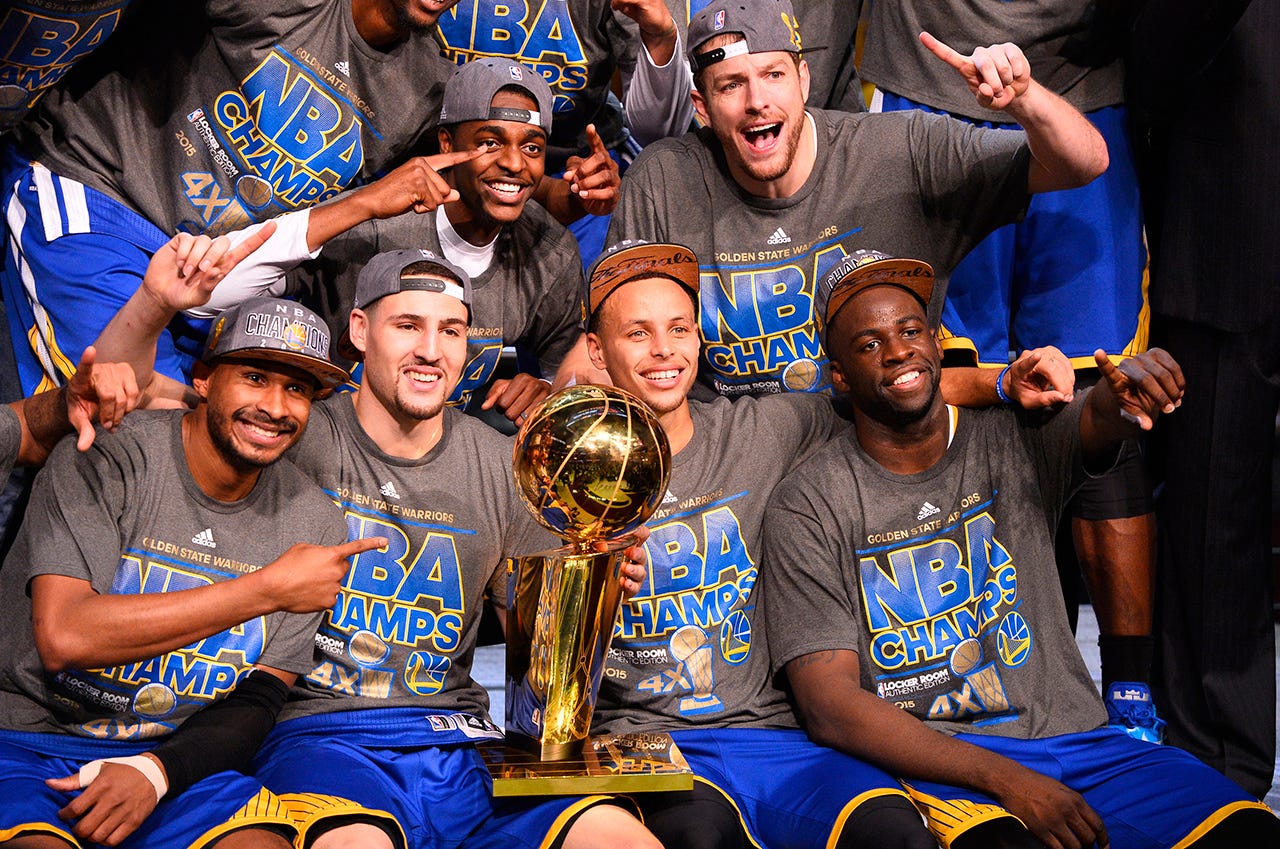
The date is June 11, 2015. Down 2-1 in the NBA finals vs. Lebron James and the Cleveland Cavaliers, the Golden State Warriors announce a new starting lineup in game 4 of the NBA finals. Andrew Bogut — the team’s starting center — would be relegated to the bench in favour of 6th man Andre Iguoudala — who had yet to start all season. The Warriors’ new starting lineup (dubbed “the death lineup”) did not include a single player taller than 6’7” (Harrison Barnes), with Draymond Green (6’6”) serving as the new starting center. Golden State experimented with “small ball” all season, but after making the switch to this starting lineup, they won three straight games and the championship. Iguoudala reverted to a 6th-man role in the following regular season, but the team continued to rely on their “death lineup” for sustained stretches and to close games over the course of their dynasty (eventually swapping Barnes for Durant alongside Iguoudala, Green, Stephen Curry, and Klay Thompson). In the aftermath of the Warriors’ first title and throughout their era of dominance, countless think pieces were written about basketball’s small ball revolution, and several teams made moves to either counter or mimic the Warriors approach. By the time Kevin Durant left in the summer of 2019, basketball looked nearly unrecognizable compared to the sport which within the same decade was decided by an 83-79 game 7. That game was the decisive contest in the 2010 finals, in which the Los Angeles Lakers bested the Boston Celtics. The 2010 Celtics had a starting lineup which included 3 players (Rajon Rondo, Kevin Garnett, and Kendrick Perkins) who combined to attempt 1.1 3-pointers per game. Such a swift change to the game of basketball in such a short period of time had major ramifications on several careers. In 2016, Andre Drummond made an all-NBA team as at 22 years old. Less than 4 years later he was cap-dumped for a 2nd-round pick and an expiring contract at the trade deadline while averaging a career high in scoring. Greg Monroe (once Drummond’s teammate) signed a max-contract in the 2015 off-season with the Milwaukee Bucks. He was traded to the Suns and eventually bought out before the three-year deal concluded. Naturally, if the NBA was in the midst of devaluing its brawling, lead-footed centers, a different archetype of player would increase in value to fill its place. But what would that player be? Perhaps no team in the Association tried as aggressively or as creatively to build a team capable of toppling the Warriors than the Houston Rockets. Led by a prime James Harden on the court and early analytics-adopter Daryl Morey in the front office, the Rockets had a front row seat to the 2014-15 Warriors, which dispatched them in 5 games in the 2015 conference finals. The Rockets remade their team following a disappointing 2015-16 season, and won 55 games in 2016-17 with a lineup built around shooting from all five positions. Each of their six most-played players in the 2016-17 season attempted a minimum of 4.3 3-pointers per game. (Clint Capela was the team’s starting center and played the 7th-most minutes on the team, and Nene played plenty of backup center minutes as well) The ostenisble center of their situational “five-out” lineup was Ryan Anderson, a 6-9 power forward who was frail defensively but one of the best 3-point shooters at his size in the league. If the NBA was going all in on 3-point shooting, could a player like Anderson become the new platonic…